Franklin County · Adirondack Park · New York

Big Wolf Lake

A private Adirondack lake near Tupper Lake — born from lumber country, scarred by the great fire of 1912, and reborn in 1916 as one of the North Country's quietest and most enduring camp communities.

Photo: Tupper Lake shoreline, Adirondacks — Yinan Chen / Wikimedia Commons, Public Domain
The Lake

A quiet giant north of Tupper Lake

Big Wolf Lake — today the officially recognized name, with Wolf Pond preserved only as a historic variant in the federal Geographic Names Information System (older maps often say Big Wolf Pond) — sits at about 1,578 feet of elevation in the Town of Tupper Lake, Franklin County, roughly five miles north of Tupper Lake village, just off NY Route 30.[1]

The lake spans roughly 1,100 acres and forms the centerpiece of a private preserve of several thousand acres — about 4,000 by AARCH's account, closer to 5,000 by others — which originally included neighboring Little Wolf as part of the tract. Along its densely forested shoreline stand several dozen family camps — a number of them historically and architecturally significant, including five designed by the noted Adirondack architect William G. Distin of Saranac Lake.[2]

Unlike its busy public neighbors — Tupper Lake, Upper Saranac, the Raquette River corridor — Big Wolf has remained private, quiet, and remarkably unchanged for over a century. Access to the lake itself is limited to camp owners and their guests, and to protect its pristine water no boat that has touched another waterbody is allowed on it.[2] [3] The result, in the words of one long-time camper's family: “Time goes on, and the world becomes more complex, but this place never changes.”[4]

Deep History

Lumber, fire, and rebirth

Lumber country (1850–1912)

The Tupper Lake region was one of the great logging theaters of the Adirondacks. Commercial lumbering around Tupper Lake began around 1850 with the Pomeroy Lumber Company, and the arrival of the Mohawk & Malone Railway in the early 1890s — with its junction at the village of Faust, still called “The Junction” today — turned the area into a booming mill town. The surrounding township, organized in 1890 as the Town of Altamont, was only renamed the Town of Tupper Lake in 2004.[5]

The dominant lumber operator in the country north and east of Big Wolf was the Santa Clara Lumber Company, founded in 1888 by Titus B. Meigs. His son Ferris J. Meigs (Yale, 1889) learned the business in his father's mills and woods, became the company's president in 1911, and led it until it wound down operations in 1941. The company was an early practitioner of what would become scientific forestry — it was noted for planting at least one tree for every tree it cut, and was among the first to prepare and sell processed pulpwood for papermaking.[6] Meigs would prove to be the pivotal figure in Big Wolf's story.

At the turn of the century the lake and its surrounding tract were owned privately — according to the community's own founding memoir, by “a successful retail druggist with several stores located in New York City,” who built a sawmill on the shore of the lake. That mill building survives today, converted into the Big Wolf Club House.[4]
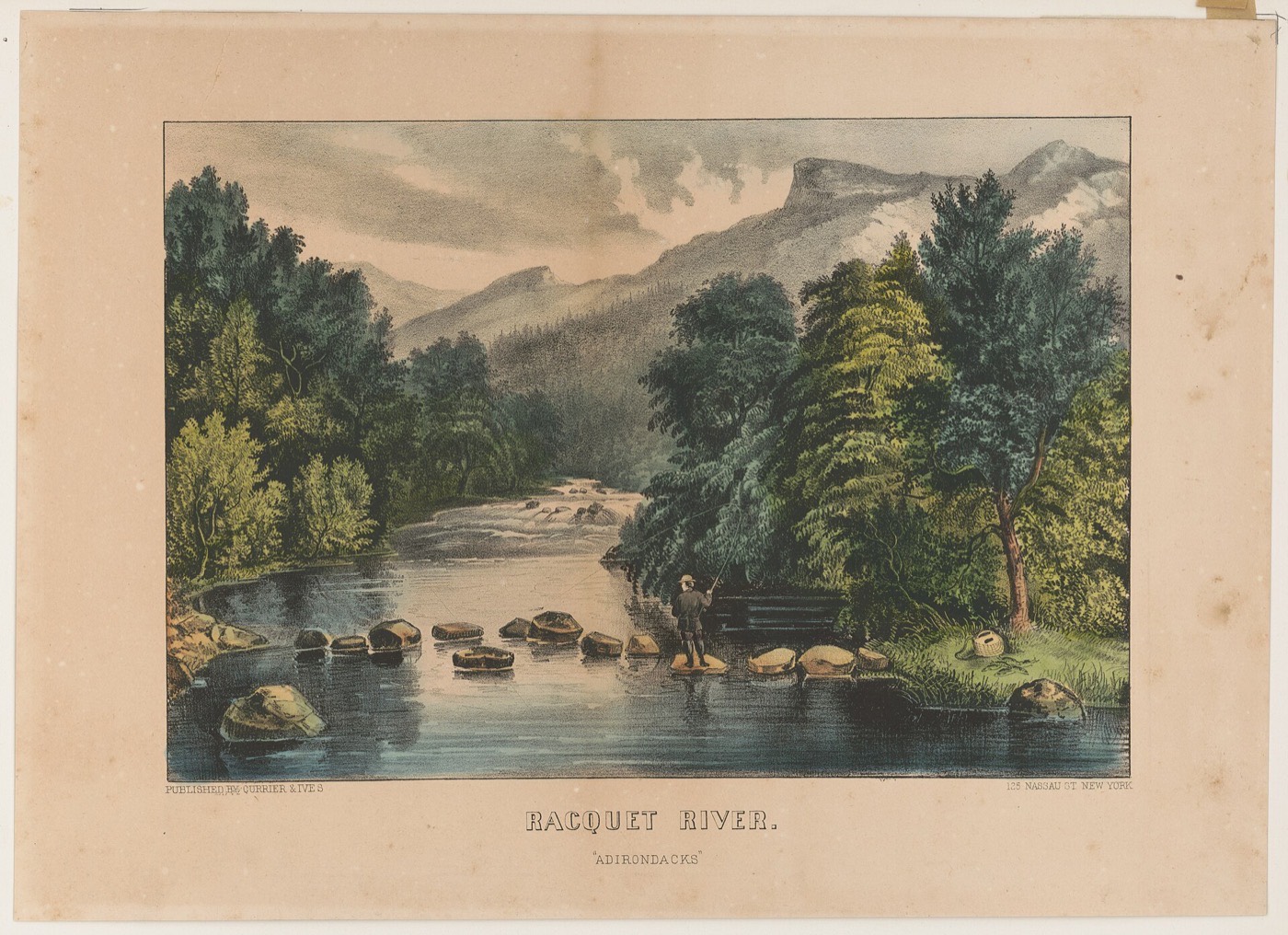
19th-century Currier and Ives lithograph of the Raquette River in the Adirondacks
“Racquet River — Adirondacks,” a 19th-century Currier & Ives lithograph. The Raquette, a few miles from Big Wolf, was the region's great log-driving highway. Library of Congress via Wikimedia Commons, Public Domain.

The great fire of 1912

The early 20th century brought catastrophic fire years to the Adirondacks — 1903 and 1908 are the most infamous — driven by drought and the tinder of logging slash left along the new railroads. In August 1912, fire came to Big Wolf. Most of the lake's shoreline forest burned.[4]

Dudley B. Lawrence, Ferris Meigs' brother-in-law and one of the founding campers, left the community's most vivid account of that summer, written from the deck of an ocean liner hundreds of miles offshore:

“When I came on deck I noticed we were proceeding in what seemed to be a fog but was somehow different. I asked one of the officers and he told me that this was no fog, it was smoke from the burning Adirondacks which had blown so far to sea. That very day most of Big Wolf Lake was on fire. It was the end of one era but the beginning of another.” — Dudley B. Lawrence, founding-era camper, quoted in the Big Wolf history preserved by lake families[4]

The druggist-owner, the story goes, was so distraught that he refused ever to visit the lake again. He ordered everything salvageable sold — “even to netting the lake for fish” — and offered what remained at a low price to Ferris Meigs.[4]

Founding a community (1915–1916)

Meigs bought the burned-over lake and its surrounding lands with a plan: sell campsites and rebuild the forest. Lawrence, visiting at Meigs' suggestion around 1915, described “a discouraging outlook… nothing to see except blackened stumps and burned-over hills and fields” — but also the first birches and poplars of second growth pushing up through the ash. Meigs meanwhile was “busily engaging in planting tiny pines, spruce and hemlock on both sides of the road to town and in other parts of the burned-over acres.” The tall trees lining the camp road today are his plantings.[4]

Big Wolf was officially established on July 1, 1916, originally as a community of some 32 families.[4] [7] Early camp life was deliberately primitive: kerosene lamps and candles, ice cut in winter and hauled from the ice house, hand-cranked gasoline motors to pump water, wood-fired kitchen stoves. Electric lines began reaching the camps in 1917. And from the earliest years, the lake developed its signature pastime — the sailing canoe, a tradition Lawrence proudly noted was still going strong four decades later, and which the AARCH architectural tours still remark on today.[4] [2]
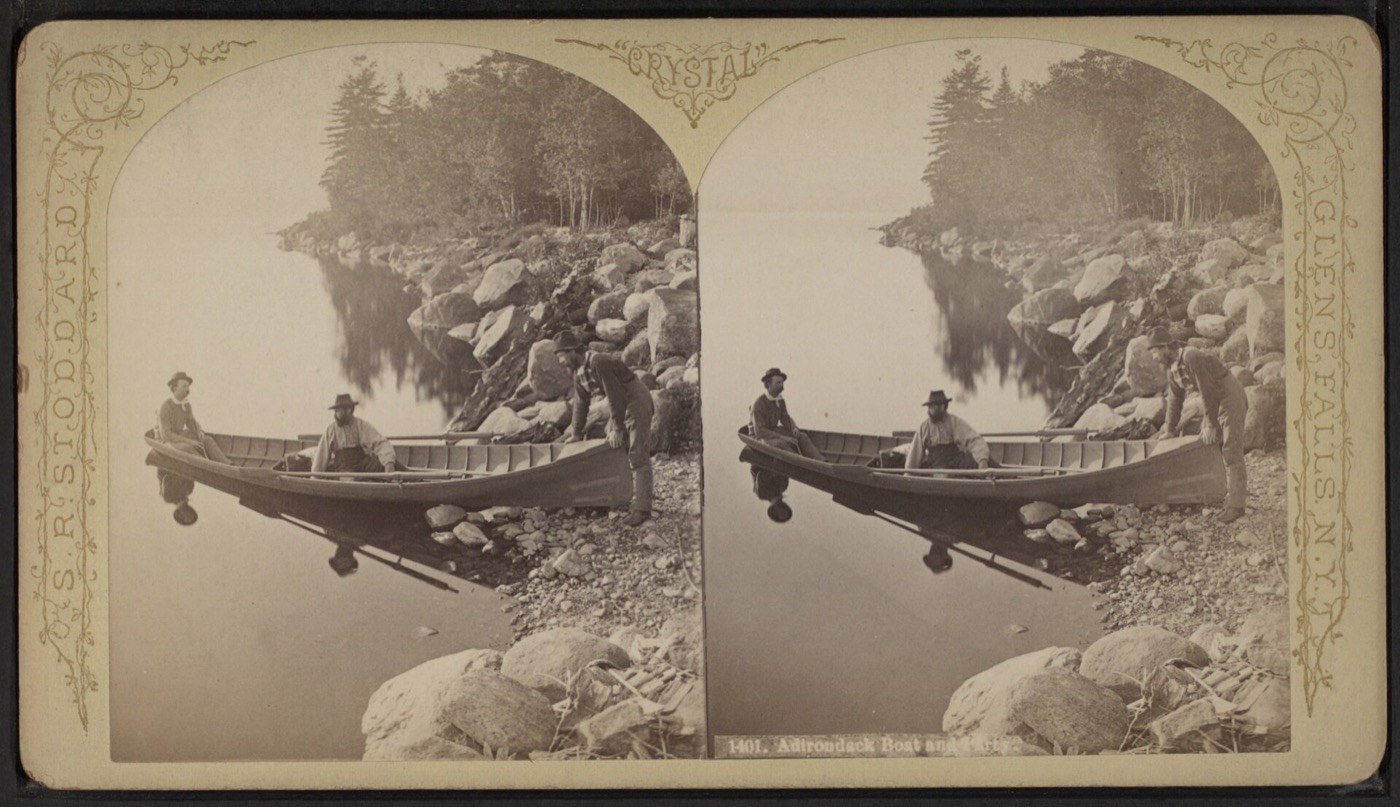
Seneca Ray Stoddard photograph of an Adirondack boating party, late 1800s
An Adirondack boat party photographed by Seneca Ray Stoddard (1844–1917), whose images defined the region's Gilded Age. Era-appropriate regional imagery — not Big Wolf itself. Wikimedia Commons, Public Domain.

Preservation: the Association era

The community Meigs founded matured into the Big Wolf Lake Association, formally organized around 1960, which stewards the lake and preserve today.[7] Its clubhouse — the converted pre-fire sawmill, now more than a century old — remains the social heart of the lake and the keeper of its history.[2] [4] Some thirty-odd member families make up the Association today, under rules designed to keep the water pristine: no off-lake watercraft, trailers, or fishing gear that has been used elsewhere may be brought in — an unusually early and strict invasive-species regime.[3]

The lake's story was set down by Lucia Meigs Andrews — Ferris Meigs' daughter — in her book Big Wolf Lake, 1916–1966, written for the community's fiftieth anniversary, and in her memoir Switchback.[7] [8] Adirondack Architectural Heritage (AARCH), whose founding board president Howard Kirschenbaum has a camp on the lake, has led guided tours of Big Wolf's historic camps by canoe.[2]

More lore

Big Wolf was on the Gilded Age tourist map before it was a community. When Dr. W. Seward Webb's new railroad (the Mohawk & Malone, later the Adirondack Division of the New York Central) opened the region in the early 1890s, guidebook writers traced its route pond by pond — E.R. Wallace's Descriptive Guide to the Adirondacks (1894) told travelers that from Tupper Lake Junction “the line takes an easterly direction past Little Wolf Pond, and turning northerly passes Big Wolf, Rollin's, Floodwood and Long Ponds to Saranac Inn Station.” Passengers bound for the grand hotels of Upper Saranac rolled past Big Wolf's shore two decades before the first camps rose there.[13]

Ferris Jacobs Meigs (1868–1943) was a more complicated public figure than the lake's gentle founding story suggests. A delegate to the 1915 New York Constitutional Convention, he proposed the article placing the Adirondack forests under a commission — and was pilloried for it in the Brooklyn Daily Eagle, whose columnist Julius Chambers branded him “chief of one of the lumber corporations now before the courts for denuding the Adirondack Mountains of their timber.” The same man state forestry officials later complimented publicly for his tree nurseries and replanting — the hands that reforested Big Wolf — spent 1915 being caricatured as a land grabber. His own summer base was White Birches Camp on Follensby Pond, held in the Santa Clara Lumber Company's name.[14]

Meigs also left a memoir of his own — a history of the Santa Clara Lumber Company, serialized posthumously in the Tupper Lake Free Press and Herald in 1970. It preserves, among much else, the drama of the winter of 1898–99: to close the land sale that created the St. Regis Paper Company, young Meigs contracted to sell 58,000 acres of pulpwood land when his company owned only 36,000 — then talked the receiver of a bankrupt neighbor into optioning him the missing 22,000 acres at $2.00 an acre, land he had already sold at $6.00. The gamble carried the company through the bitter split with its senior partner George E. Dodge that followed.[15]

And the lake's architecture is now earning official recognition: in June 2025 the New York State Board for Historic Preservation recommended The Moorings — nominated under the name “Wintergreen,” for the 1965 house William G. Distin designed there at the twilight of his career, alongside the camp's 1918 lake house, beach house, and carriage house by architect Frederick P. Kelley — for the State and National Registers of Historic Places, calling it a rare example of how rustic Adirondack camp architecture evolved into the post-war era.[16]

A note on sources: Big Wolf is a private lake with little formal published history. The core founding narrative on this page comes from Dudley B. Lawrence's first-person memoir as preserved and republished by Big Wolf camp families[4], cross-checked against Adirondack Architectural Heritage tour records[2], the documented history of Ferris J. Meigs and the Santa Clara Lumber Company[6], and regional histories of Tupper Lake[5]. The identity of the pre-1912 “New York City druggist” owner is not named in any source we could locate.

Timeline

A Lake Tradition

The Sailing Canoes

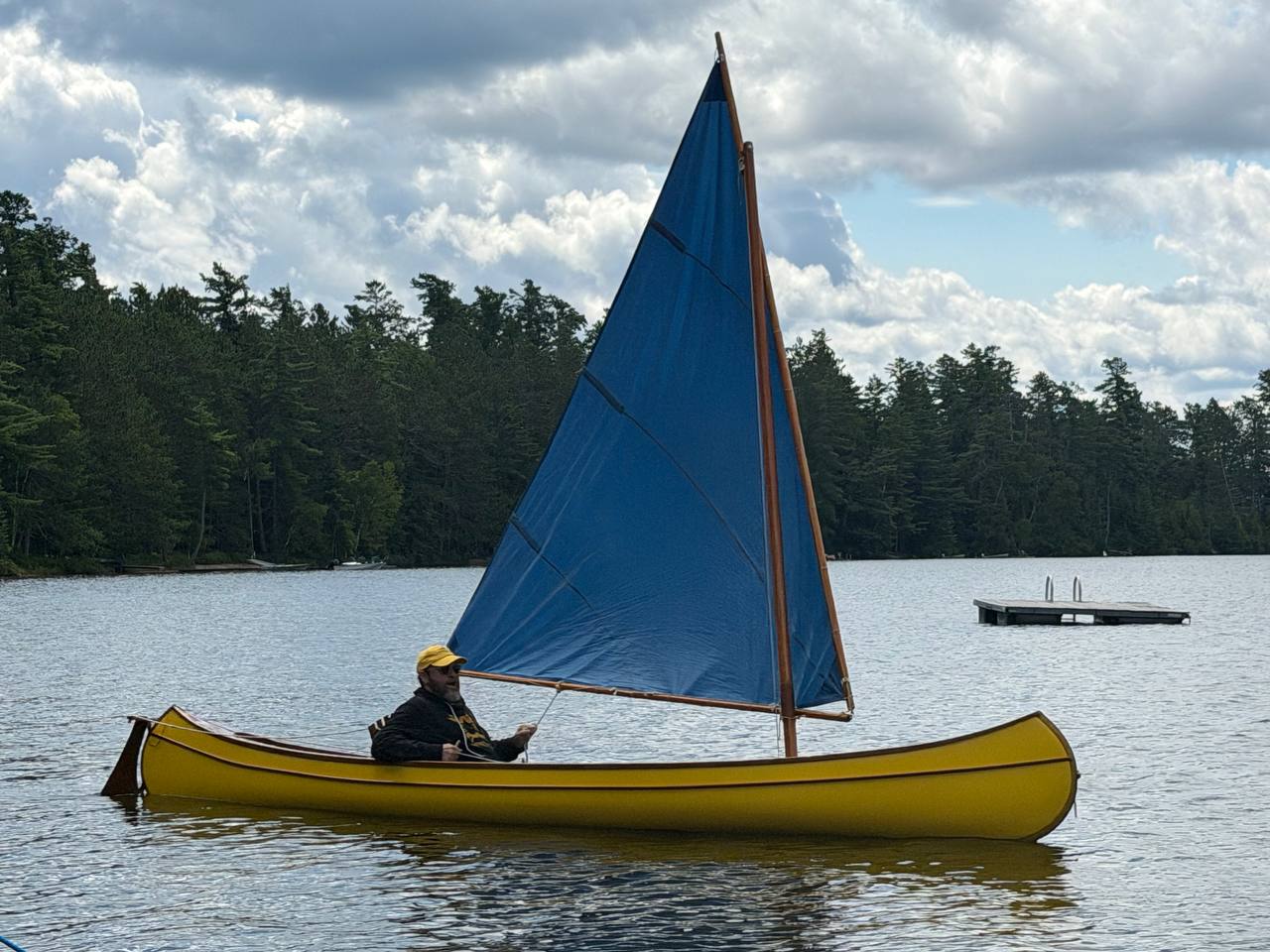
If Big Wolf has a signature image, it is a canoe under sail. The custom took hold in the community's earliest years — the founders arrived with paddling canoes and rowboats, and sail rigs followed soon after — and it became so much a part of lake life that Dudley B. Lawrence, writing his memoir at mid-century, singled it out with evident pride:[4]

“An unusual feature of life for forty years at Big Wolf has been the sailing canoe which continues, I'm glad to say, at this time. In the beginning the campers all had paddling canoes with their rowboats.” — Dudley B. Lawrence, founding-era camper[4] — “forty years,” written at mid-century, dates the fleet's origins to roughly the 1920s.
A yellow wood-and-canvas sailing canoe with a blue leg-o'-mutton sail on Big Wolf Lake, August 2026
A Big Wolf sailing canoe under sail, August 2026. Photo: Ted Barnett.

The boats themselves are the classic conversion of the early twentieth century: wood-and-canvas paddling canoes fitted for sail with a leg-o'-mutton — triangular — rig on wooden spars, typically steadied by leeboards and steered with a paddle. Builders like Old Town offered exactly this arrangement as a kit, and it became the standard way an American camp family turned a canoe into a sailboat.[12] No published source names a specific builder behind Big Wolf's fleet, nor a “Big Wolf one-design” class; the fleet's full story lives in the Association's own records and in Lucia Meigs Andrews' Big Wolf Lake, 1916–1966.[7]

The lake's sailing habit reached the local boatshops, too. R.W. Frenette of Tupper Lake custom-built a 15½-foot sailing guideboat for Big Wolf Lake — fitted with curly-maple oars and a carved wolf on its deck — a one-off that later crossed the block at an Adirondack auction for $14,400.[11]

And the tradition is unbroken in a literal sense. Because Big Wolf admits no boat that has touched another waterbody — the invasive-species rule that has kept its water pristine — the canoes that sail the lake today live on it year-round.[2] For anyone tracing the history of an individual hull, the Wooden Canoe Heritage Association maintains the build records that identify historic wood-and-canvas sailing canoes by serial number.[12]

Architecture & Families

Camps of Big Wolf

“Camp” in the Adirondack sense means a family compound — main lodge, sleeping cabins, boathouse — built for summers in the woods. Big Wolf's camps were mostly raised between the 1910s and 1930s, several by architects of real note, and many remain in the founding families three and four generations on.

Built 1918 · Eastern shore

The Moorings

Built by the Moore family — its 1918 lake house, beach house, and carriage house the work of architect Frederick P. Kelley — with a 1965 dwelling, “Wintergreen,” by William G. Distin. Recommended for the State and National Registers of Historic Places in 2025. Today the home camp of Howard Kirschenbaum, founding board president of Adirondack Architectural Heritage, who leads canoe tours of the lake's camps from here.[2] [16]

Built 1925 · The Quinn Camp

Quinn Camp

Built for the Fielder Coffin family with a cobblestone chimney of rocks pulled from the lake and ridge poles of water-seasoned hemlock logs retrieved from the lake bottom. Purchased by the Max Rettig family in 1977; now on its fourth generation of “Big Wolfers.”[4]

Built 1930 · Santa Clara Camp

Santa Clara Camp

Built by architect Penrose V. Stout (known for his Bronxville work) and his wife Lucia Meigs Stout — Ferris Meigs' daughter — with help from Lucia's parents. Lucia, later Lucia Meigs Andrews, became the lake's historian.[8]

Five camps · 1920s–1965

The Distin Camps

At least five Big Wolf camps were designed by William G. Distin (1884–1970) of Saranac Lake — heir to William Coulter's Great Camp practice and architect of Camp Wonundra (William Rockefeller, 1934) and Eagle Nest at Blue Mountain Lake.[2] [9]

Pre-1912 · The Club House

Big Wolf Club House

The former sawmill built by the lake's pre-fire owner, converted into the community clubhouse after 1916. Now more than a century old, it anchors Association life and keeps the lake's history.[4] [2]

Tradition · 1916–present

The Sailing Canoes

Big Wolf's signature craft. Paddling canoes and rowboats came first; sail rigs followed, and canoe sailing has been the lake's defining pastime for more than a hundred years. Because no off-lake boats are permitted, the fleet lives on Big Wolf year-round.[4] [2]

Seneca Ray Stoddard photograph of Hotel Wawbeek on Upper Saranac Lake, 1890
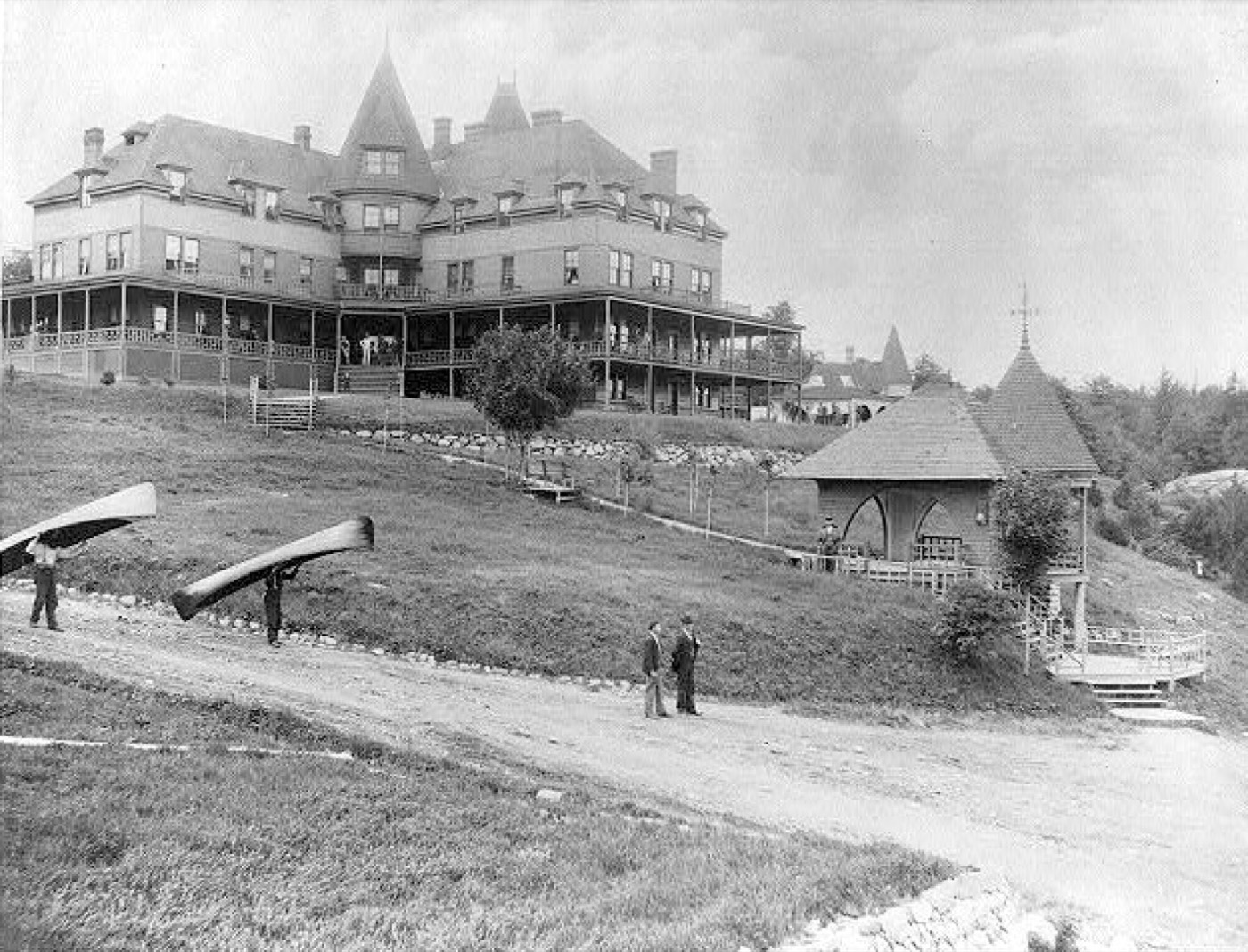
Hotel Wawbeek on Upper Saranac Lake, photographed by Seneca Ray Stoddard in 1890 — the Gilded Age resort world a few miles east of Big Wolf, and the era from which the lake's first owners came. Wikimedia Commons, Public Domain.
Where It Is

Map

Big Wolf Lake lies west of NY Route 30, about five miles north of Tupper Lake village (GNIS: 44.2708° N, 74.4679° W, elev. 1,578 ft).[1] Toggle the topographic layer to see the surrounding terrain. The lake and its shores are private; please respect posted lands.

Visitor Guide

The Big Wolf area today

The lake itself is private, but it sits in the middle of one of the best low-key outdoor regions in the Adirondacks. Everything below is public and within about 25 minutes of the Big Wolf Road turnoff.

Hiking — the Tupper Lake Triad

Three short summits ring Tupper Lake; climb all three and the town will sell you a Tupper Lake Triad patch. All are family-friendly half-day hikes.

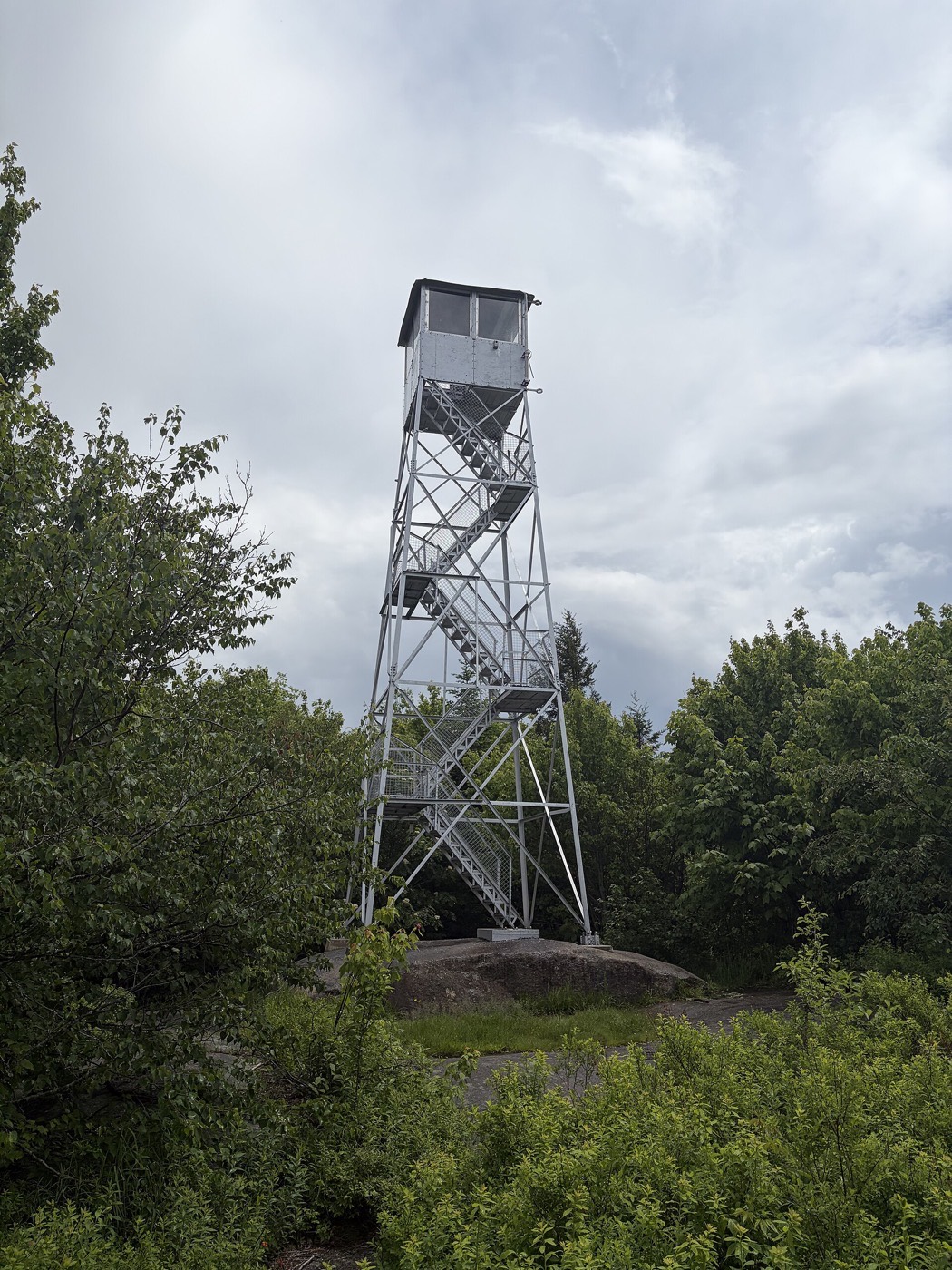
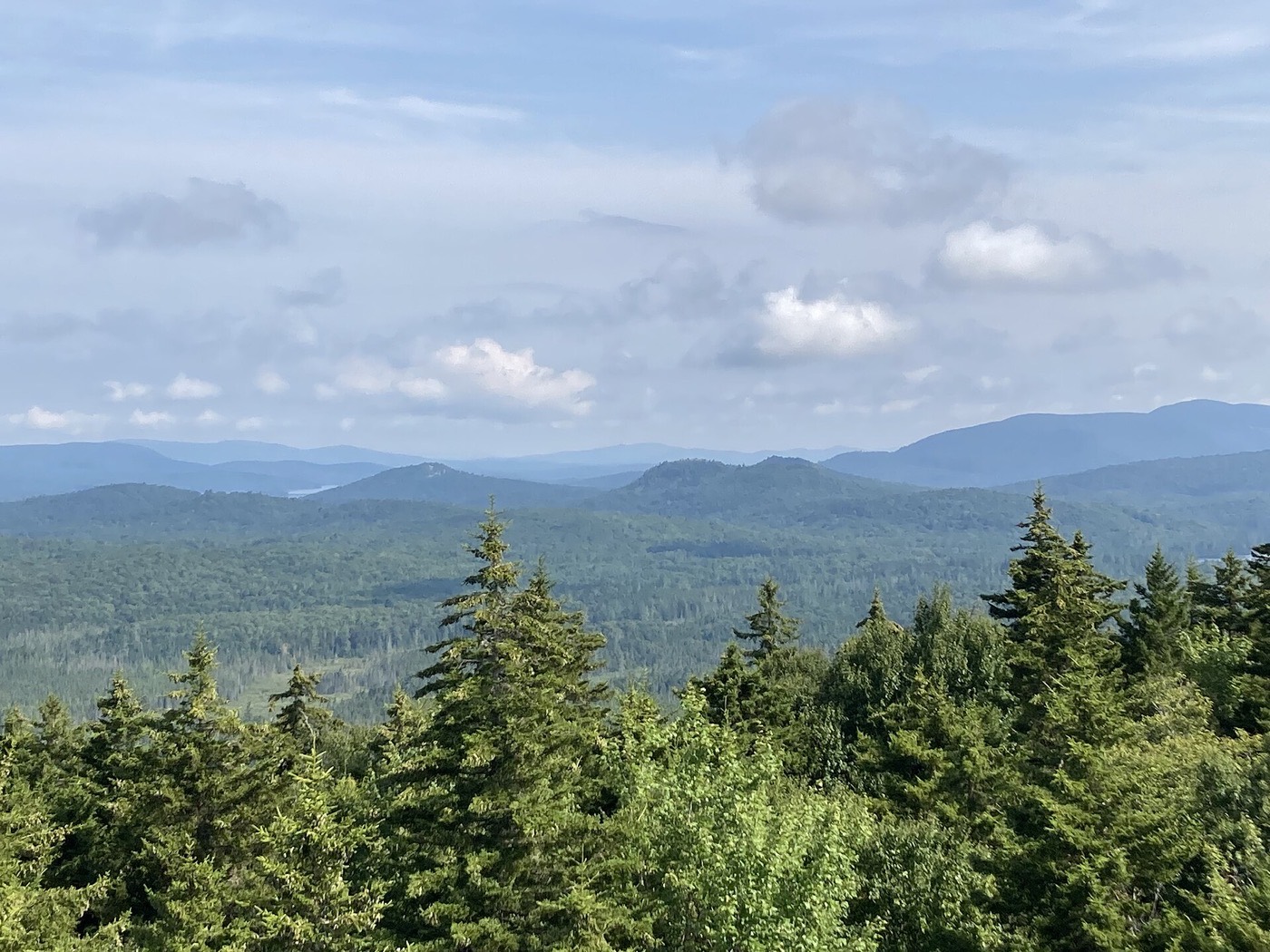
View from Mount Arab fire tower over Adirondack lakes
2,545 ft · ~2 mi round trip

Mount Arab

A short, steady climb to a restored 1918 fire tower with a 360° panorama over Eagle Crag Lake, Mount Arab Lake, and the whole Tupper basin. Trailhead off Route 3 west of Tupper Lake, via Conifer Rd.

Open rock summit of Coney Mountain in the Adirondacks
2,265 ft · ~2.2 mi round trip

Coney Mountain

A corkscrew trail to a wide-open bald summit — one of the best views-per-effort ratios in the Park, with the High Peaks on the horizon. Trailhead on Route 30 south of Tupper Lake.

Goodman Mountain and Coney Mountain seen across water
2,178 ft · ~3.4 mi round trip

Goodman Mountain

A gentle graded trail (the first half is paved-then-wooded old highway, partly accessible). Renamed in 2002 for civil-rights martyr Andrew Goodman, whose family summered in Tupper Lake.

Paddling

Big Wolf's own water is members-only, but the public paddling nearby is superb:

  • Bog River Flow / Lows Lake — a dammed wilderness flow with island campsites and resident loons; one of the Park's classic overnight paddles.
  • Raquette River — the old log-driving highway; the Axton Landing–Tupper stretch is flatwater through silver maple floodplain.
  • Tupper Lake & Raquette Pond — big water with public launches right in the village.
  • Horseshoe Lake — quiet Route 421 access, primitive campsites along the shore.

Fishing

Big Wolf Lake's fishery (lake trout, smallmouth) is managed privately by the Association, with a strict no-outside-gear rule to keep invasives out.[3] The DEC lists no special regulations for Big Wolf Pond, so NYS statewide seasons govern — e.g. lake trout Apr 1–Oct 15, 21" minimum, 3/day.[10] Public alternatives: Tupper Lake (walleye, smallmouth, northern pike) and the Raquette River. Always check the current DEC regulations.

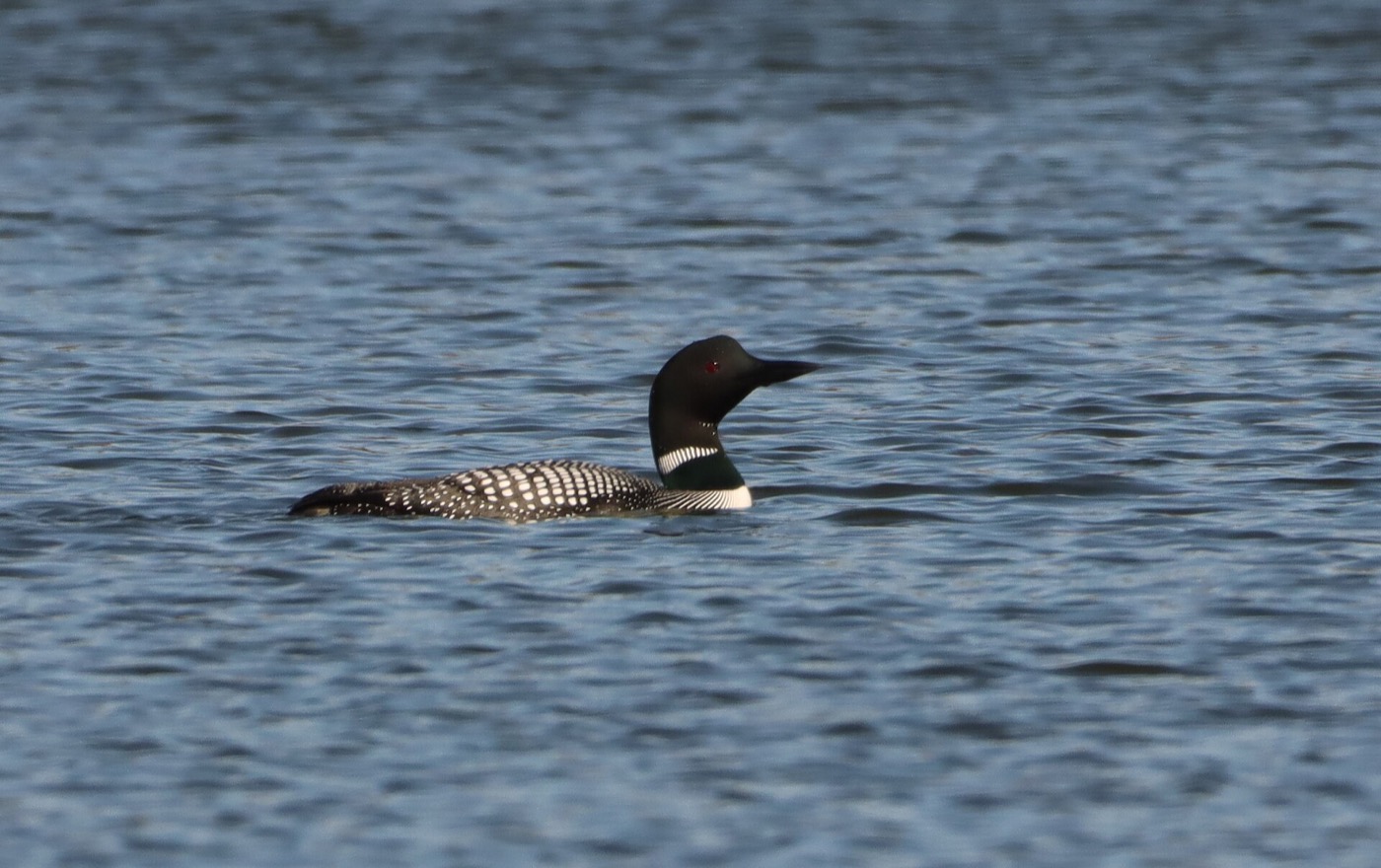
Common loon swimming
The common loon — the sound of every Big Wolf evening. USFWS photo, Public Domain (representative image).

Wildlife & nature

The Tupper Lake country sits in the Adirondacks' boreal sweet spot. Loons nest on most quiet lakes (the Adirondack Center for Loon Conservation is headquartered in Saranac Lake). Nearby bogs and spruce flats — Massawepie Mire, Sabattis Bog, Spring Pond Bog — hold boreal specialties: Canada jay, boreal chickadee, black-backed woodpecker, spruce grouse. Moose, otter, fisher, and bald eagles are all regulars; the reforested 1912 burn is now mature mixed forest full of warblers in June.

Around Tupper Lake

The Wild Center natural history museum in Tupper Lake
Museum · Tupper Lake

The Wild Center

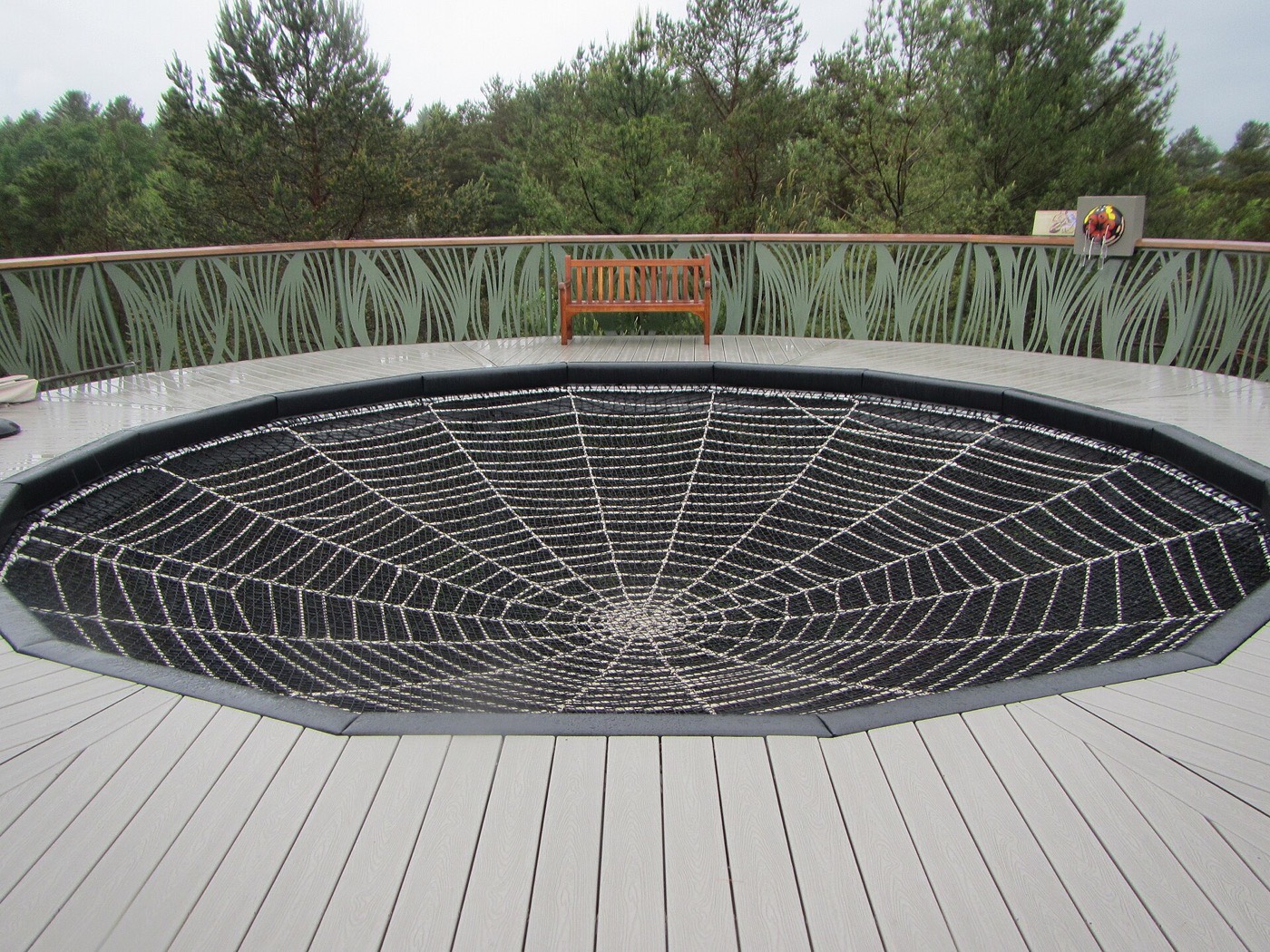
The Adirondacks' natural history museum, with the treetop Wild Walk, live otters, and 115 acres on the Raquette. wildcenter.org

Dark skies · Tupper Lake

Adirondack Sky Center

Tupper Lake's famously dark skies host a public observatory with regular stargazing nights, and the town is pursuing international dark-sky designation. adirondackskycenter.org

Arts & events

Tupper Arts & the village

Gallery and performance space on Park Street, plus the summer farmers market, Tupper Lake Brewing, and the Adirondack Rail Trail's western reaches. Events calendar: tupperlake.com/events

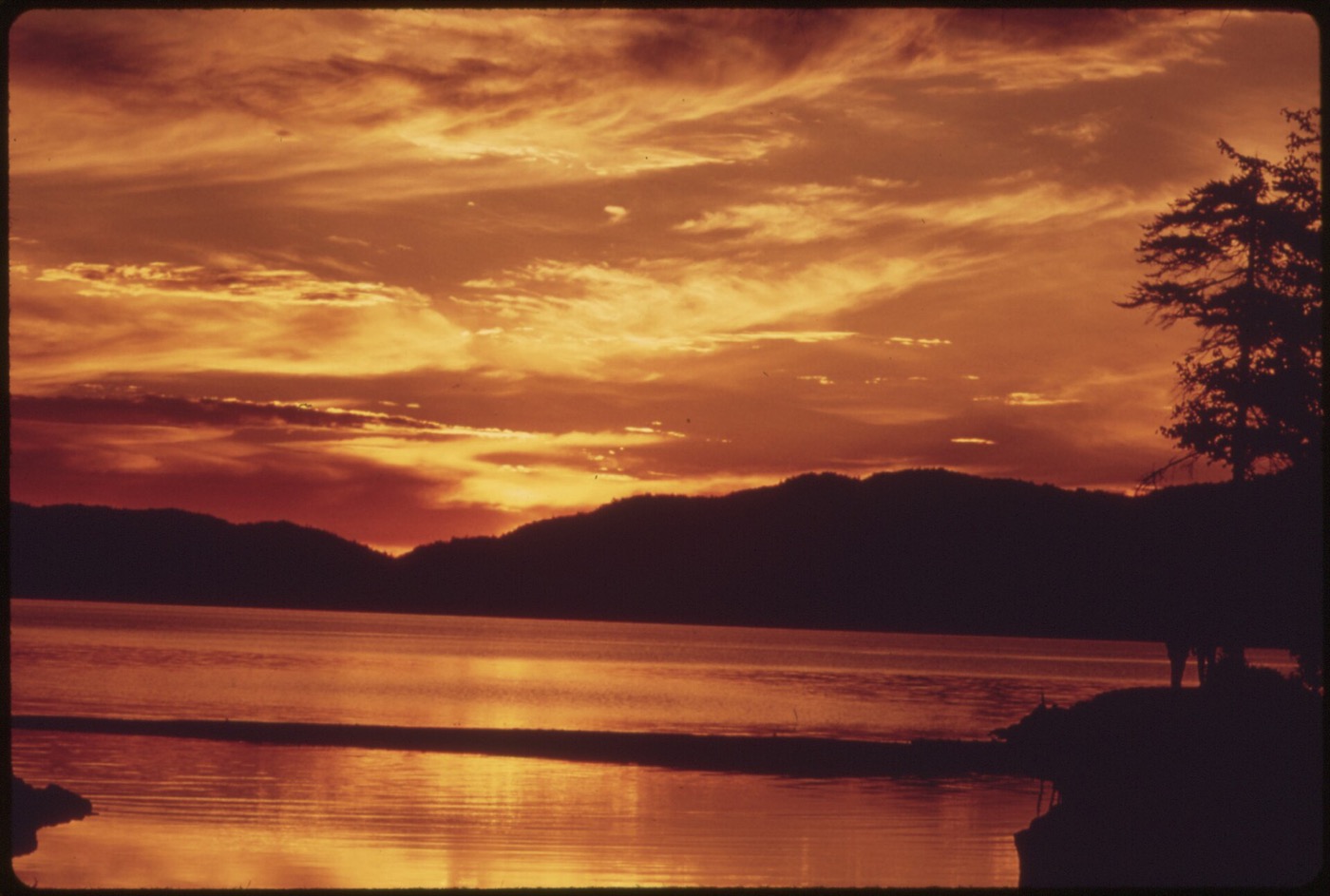
Sunset over an Adirondack lake, 1973 EPA Documerica photograph
“Sunset over Fourth Lake, in the Adirondack Forest Preserve,” photographed for the EPA's Documerica project (1973) by ecologist Anne LaBastille. Lawrence wrote of Big Wolf's “brilliant sunsets and moon rises over the lake.” U.S. National Archives via Wikimedia Commons, Public Domain.
The Voice of the Lake

Loons

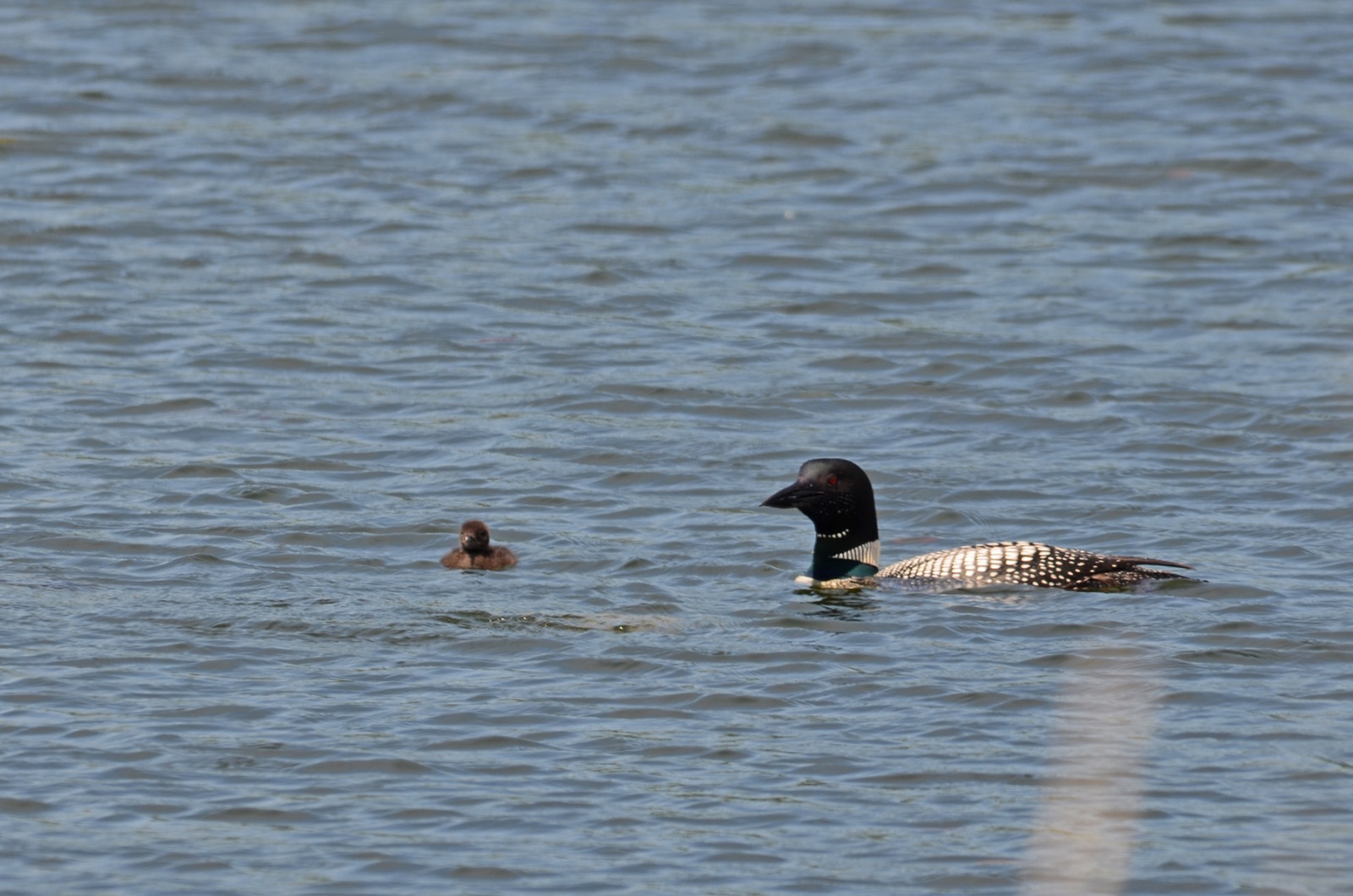
No sound belongs to a Big Wolf evening the way the loon's does. The common loon (Gavia immer) has four main calls, each with its own job: the long, wolf-like wail that carries across the water to locate a mate or chick; the quavering tremolo — the famous “laugh” — which is actually an alarm; the yodel, given only by males defending territory, each male's version distinct enough that researchers can tell individual birds apart; and the soft hoot that passes between mates and chicks at close range.[21]

Loons are built for water so completely that they cannot walk on land — their legs sit too far back — so they nest right at the water's edge, on quiet shorelines and small islands. For the first weeks of life, chicks ride on their parents' backs, snuggled into the wings for warmth and safety from predators. A loon rearing up and slapping across the surface in a “penguin dance” isn't performing; it's distressed and defending its territory or its chicks. The kindest thing a paddler or sailor can do is give a nesting or dancing loon a wide berth — birds flushed off the nest too often will abandon it.[20]

Common loon carrying a downy chick on its back
A common loon with a chick riding on its back — the standard mode of travel for a loon's first weeks. U.S. Fish & Wildlife Service, Public Domain.

The annual census

Adirondack loons have their own research institute: the Adirondack Center for Loon Conservation, headquartered at the Loon Center in Saranac Lake, about half an hour from Big Wolf. Every year since 2001 it has run the NY Annual Loon Census — one hour, 8 to 9 a.m., on the third Saturday of July — with volunteers counting loons on their assigned lakes across the state.[17] The 2025 census set a record: 815 volunteers on 306 lakes, ponds, and rivers counted 1,059 loons, the first time the count has ever topped a thousand. The loon remains a New York State “species of special concern,” and the census data helps the DEC decide whether that label can someday come off. Private waterbodies take part through their own volunteer coordinators — a natural fit for a lake association.[18]

What threatens them

The grimmest threat is the smallest: lead fishing tackle. Loons swallow pebbles to grind food in their gizzards, and a lost lead sinker looks just like a pebble — a single half-ounce sinker kills an adult loon in two to four weeks, and ingested lead remains a leading cause of adult loon deaths. New York bans the retail sale of lead sinkers of half an ounce or less, but not their use, so conservationists run tackle-exchange programs swapping lead for tungsten, steel, and bismuth.[19] Discarded fishing line entangles and starves loons; shoreline disturbance flushes them off nests.[20] And climate change is squeezing them from both ends of the season: heavier June downpours flood shoreline nests and chill the eggs, while warmer, later winters tempt loons to linger until their flightless mid-winter molt — if the lake then freezes suddenly, they are trapped in the ice, a growing problem researchers call “molt-migration mismatch.”[17]

There is good news in the record, too. Loons are bellwethers for water quality, and since 1998 researchers have used Adirondack loons to track mercury pollution carried in on the air. After the Clean Air Act amendments and mercury emissions standards took hold, mercury levels in Adirondack loons leveled off and acidified lakes began to recover — a rare, measurable environmental win, written in loon blood samples.[17]

No loon census results are published for Big Wolf itself — like everything else about the lake, its loon records stay within the Association. But a quiet 1,100-acre lake with undeveloped shoreline, no visiting boats, and no outside fishing tackle is, almost point for point, the habitat prescription loon conservationists write. The birds on the evening water suggest the lake has been following it for a century.[2] [3]

Live Conditions

Weather at the lake

Loading current conditions…

Live data from Open-Meteo for 44.27° N, 74.47° W (lake elevation ~1,578 ft). Official forecast: National Weather Service — Burlington. Big Wolf sits high and inland: expect nights 5–10 °F cooler than the Champlain Valley, ice-out in late April, and the first frosts by mid-September.

Bibliography

Sources

  1. U.S. Geological Survey, Geographic Names Information System: Big Wolf Lake (Feature ID 971570) — official name, variant “Wolf Pond,” coordinates 44.2708° N, −74.4679° W, elevation 481 m / 1,578 ft.
  2. Adirondack Architectural Heritage (AARCH), “A Day on Big Wolf Lake” tour description — 4,000-acre preserve, 30+ camps, five Distin designs, century-old clubhouse, The Moorings, no-off-lake-boats rule, Howard Kirschenbaum.
  3. Adirondack vacation-rental and real-estate listings for Big Wolf Lake — adirondackvacations.com and adirondackestates.com — ~1,100-acre lake, ~65 Association camps, invasive-species and motorized-boat restrictions.
  4. Dudley B. Lawrence, founding-era memoir of Big Wolf Lake (written for the community history), republished with family histories of the Quinn Camp at 38bigwolflake.com — “A Bit of History” — the 1912 fire at sea anecdote, the NYC druggist owner, the mill/clubhouse, the July 1, 1916 founding, early camp life, electrification in 1917, sailing canoes, Meigs' reforestation; Quinn Camp (1925), Coffin and Rettig families.
  5. Town history of Tupper Lake / Altamont: Wikipedia — Tupper Lake (town) and tupperlake.com — The Junction — lumbering from 1850 (Pomeroy Lumber Co.), town organized 1890 as Altamont, renamed 2004, railroad-era boom, 1899 village fire.
  6. New York Heritage Digital Collections, Ferris Meigs Logging Photograph Collection (Goff-Nelson Memorial Library, Tupper Lake) and Historic Saranac Lake LocalWiki — Ferris J. Meigs — Meigs biography, Santa Clara Lumber Company (founded 1888, Meigs president 1911–1941), early scientific forestry.
  7. Adirondack Experience (Adirondack Museum) library catalog and regional records referencing Lucia Meigs Andrews, Big Wolf Lake, 1916–1966adirondack.pastperfectonline.com — founding by Ferris J. Meigs (1916, 32 families), Association organized 1960.
  8. Village of Bronxville historical bulletin on architect Penrose V. Stout — villageofbronxville.gov (PDF) — Santa Clara Camp built 1930 at Big Wolf Lake by Penrose and Lucia Meigs Stout (later Lucia Meigs Andrews, author of Switchback).
  9. On William G. Distin: Wikipedia and Historic Saranac Lake wiki — career with William Coulter, Camp Wonundra (1934), Eagle Nest, 1932 Olympic arena.
  10. NYS Department of Environmental Conservation, Region 5 special fishing regulations and statewide seasons & limits — no special regs listed for Big Wolf Pond; statewide lake-trout rules.
  11. Antiques and The Arts Weekly, “Bringing the Outdoors In with Blanchard's Adirondack Auction” — R.W. Frenette of Tupper Lake's 15½-foot sailing guideboat, custom-built for Big Wolf Lake with curly-maple oars and a carved wolf deck, sold for $14,400.
  12. Wooden Canoe Heritage Association, wcha.org — the reference body for wood-and-canvas canoe history, including early-20th-century sailing rigs and identification of historic hulls by serial number.
  13. E.R. Wallace, Descriptive Guide to the Adirondacks (1894 edition), full text at the Internet Archive — the Mohawk & Malone route “past Little Wolf Pond… Big Wolf, Rollin's, Floodwood and Long Ponds to Saranac Inn Station.”
  14. Historic Saranac Lake wiki, “Ferris J. Meigs” — biography (1868–1943), Yale 1889, marriage to Louise Adele Lawrence, White Birches Camp on Follensby Pond, presidency of the Santa Clara Lumber Co. 1911–1941, and the reprinted Brooklyn Daily Eagle column of October 19, 1915 attacking his Constitutional Convention proposal.
  15. Historic Saranac Lake wiki, “Santa Clara Lumber company” — Ferris J. Meigs' history of the company, serialized in the Tupper Lake Free Press and Herald (August 13, 1970): the 1898–99 Dodge–Meigs split, the formation of the St. Regis Paper Co., and the 22,000-acre option.
  16. New York Almanack, “State Parks Announces 20 Nominations for State and National Registers of Historic Places” (June 2025) — The Moorings / “Wintergreen” nomination: 1918 lake house, beach house, and carriage house by architect Frederick P. Kelley; Distin's 1965 Wintergreen; one of five Distin camps on Big Wolf.
  17. Adirondack Center for Loon Conservation, “Explore Loon Research” — the NY Annual Loon Census (third Saturday of July, since 2001), mercury monitoring since 1998 and post-2010 recovery, nest cameras since 2013, climate threats including nest flooding and molt-migration mismatch.
  18. Adirondack Center for Loon Conservation, “Counting Loons as Family Tradition” — 2025 census results (815 volunteers, 306 waterbodies, 1,059 loons — first count over 1,000), species-of-special-concern status, volunteer coordinators on private waterbodies.
  19. Adirondack Center for Loon Conservation, “Fish Lead Free” and fishleadfree.org/ny — a single half-ounce lead sinker kills an adult loon in two to four weeks; New York's ban on retail sale (but not use) of lead sinkers ≤ ½ oz; tackle-exchange voucher programs.
  20. Adirondack Center for Loon Conservation, “Guide to Common Loon Behaviors” — back-riding chicks, the penguin dance and other distress signs, nest abandonment from repeated disturbance, fishing-line entanglement, loons' inability to walk on land.
  21. Loon Preservation Committee, “The Call of the Loon” — the four main calls (wail, tremolo, yodel, hoot) and their functions.
Historic photographs of Big Wolf Lake itself are held privately by the Association and lake families and are not in the public domain; the historic images on this page are era-appropriate Adirondack regional photographs, honestly labeled, from the Library of Congress, U.S. National Archives, and Wikimedia Commons.